Inspired by the Indian traditions of yoga and Ayurveda
Explore authentic Ayurvedic bodywork, yoga-based stretching, and the living heritage of Kerala massage traditions in one immersive space.
From Kerala coastal lineages to the classical roots of Yoga and Ayurveda, each experience honors mindful touch, deep tissue care, and breath-led alignment.
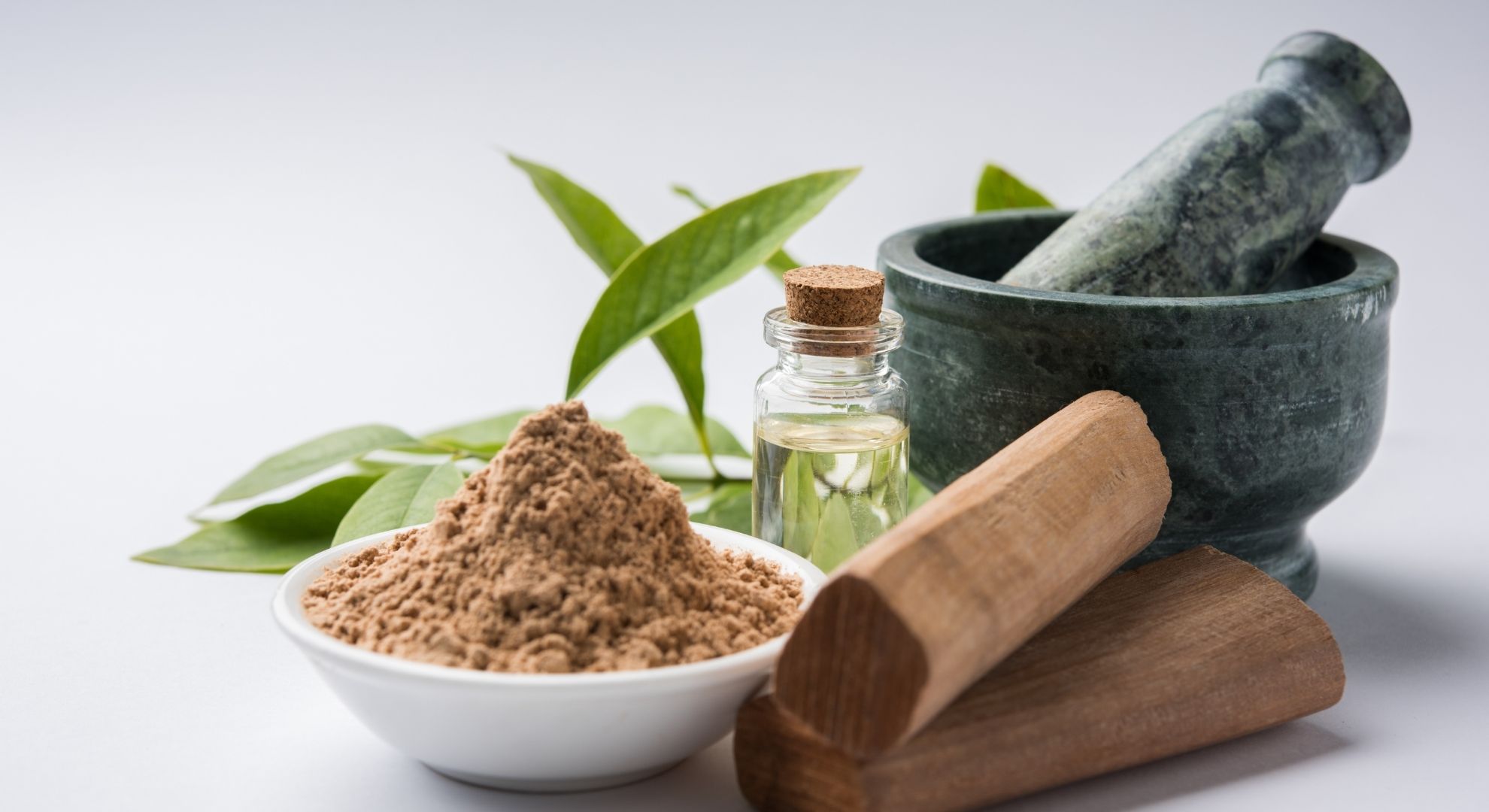
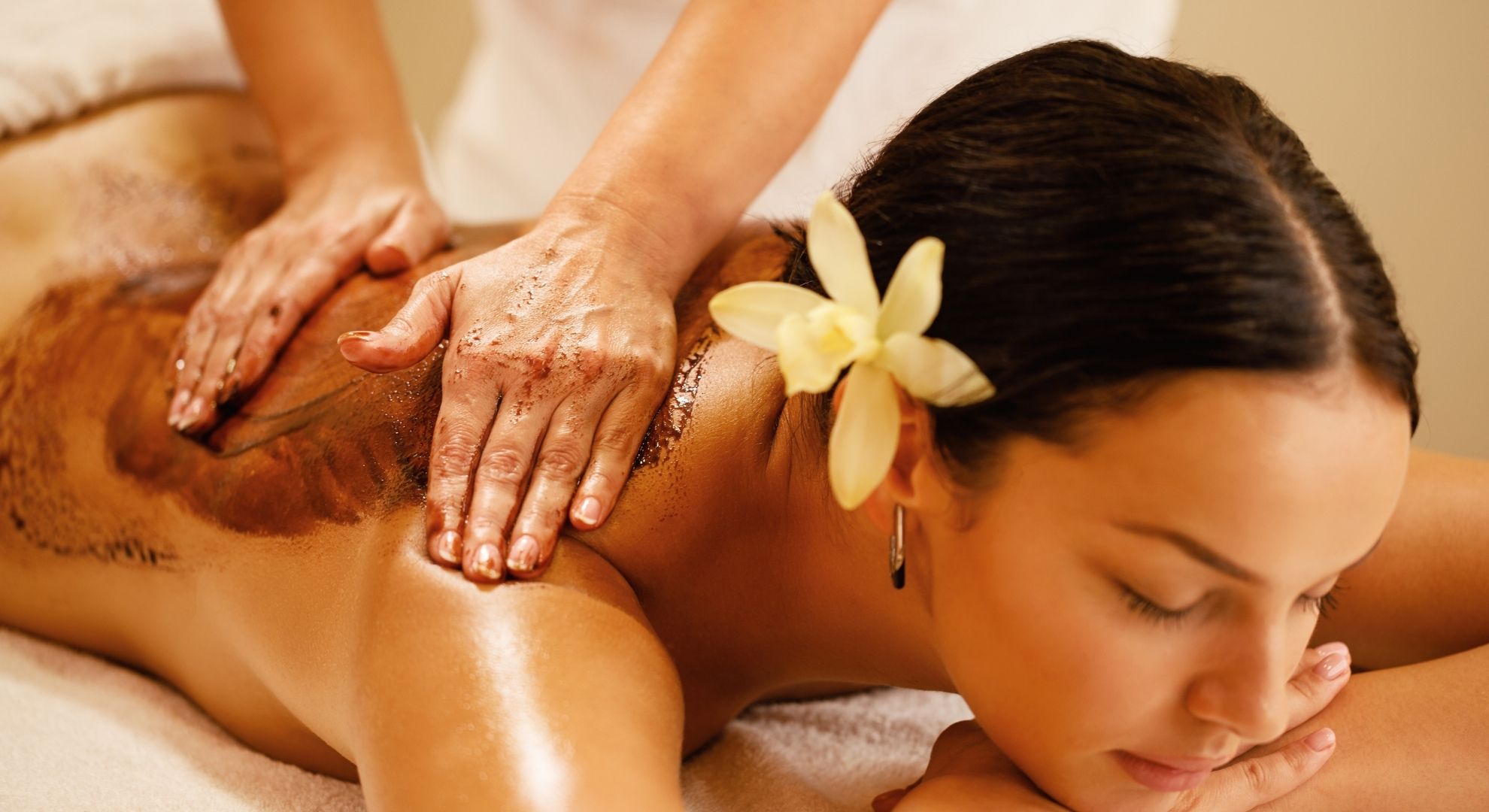
Ayurvedic yoga massage is a comprehensive dynamic yogic bodywork that combines elements of deep tissue massage therapy, yoga-based assisted stretching (passive yoga), and breathing in one treatment.
Massage therapy is performed on a mattress on the floor and usually lasts between 50 and 90 minutes. Although rooted in the Indian massage tradition, AYM differs from other traditional Ayurvedic massages, particularly in its ancillary yoga-based parts, which form the core of the method and set it apart from others. Also, unlike the famous Ayurveda oil massage treatment called Abhyangam, only a small amount of oil is used to deliver an Ayurvedic yoga massage. More importantly, the massage provides an exfoliating effect as the oil is applied with calamus root powder in slow, deep massage movements along the hands and feet. It should be said that the massager is made to measure by adjusting the pressure and selecting a series of stretches to adapt to individual needs.
Nidra yog foundation developed the original AYM method in Pune in early 2017. The yoga teacher was a world-renowned expert in Hatha yoga with precise, clever alignments and pranayama (breathing techniques).
A local massage therapist came from a family practicing traditional Ayurvedic massage therapy for charitable purposes for many generations. Thus Kusumâs massage practice evolved naturally into Ayurvedic Yoga Massage, an all-in-one bodywork combining the therapeutic tradition of Indian massage with beneficial stretching and alignment of Iyengar yoga. Over the next 30 years, Ramesh continued developing and teaching Yoga and AYM methods to worldwide students visiting India and during training courses held in Brazil, Italy, and the UK. Building on this lineage, AYM is taught.


Nidra Yog Foundation: Marma chikitsa is the precise art of touching an individual in exactly the right place at a critical moment in time, for the purpose of healing. Marmani serves as a point of access to the bodyâs innate intelligence, opening the doorway to health and well-being. They are vehicles to reach the ultimate goal of Ayurveda: perfect health, firmly rooted in a vibrantly alive body, and fully awake mind. We discuss the rich and significant spiritual dimensions of marmani. Because marmani are intimately connected to thoughts, perceptions, and emotions as well as to the entire fabric of the physical body, marma chikitsa can be a powerful ally on the spiritual path, helping to settle the mind and enhance awareness in such practices as meditation, pranayama (breath control) and yogasana, and to free the mind and body of the accumulated stresses and toxins that limit consciousness and burden the heart.
Touch begins on the physical level, but it can go much deeper, traversing the media of thoughts, feelings, and emotions. Touchâthe skilled touch of a sincere practitioner of the healing artsâcan convey its message of love through prana into the manas, buddhi, and smriti. It can penetrate ahamkara and speak its silent message through chitta into the soul.
Along the way, and especially at this deepest level, touch can engender radical change in neurochemistry. The human body is a unique chemical laboratory; a touch through the energy points of marmani can open new pathways that affect our inner pharmacy.
Sandalwood used in the form of oil, paste, and powder is effective in treating various skin problems and enhancing the glow of the skin. At Ayurville a blend of sandalwood powder honey, saffron, and camphor is used, with its antimicrobial properties sandalwood is considered as a cure for acne and blemishes. This therapy preserves the skinâs beauty while improving the complexion and helps to have smoother, more radiant skin giving it a younger look.
(Charge Rs. 3000/-) (Duration: 90 mins)A relaxing massage for energizing the senses focused on the face, forehead, and temples. Based on the ancient therapeutic principles of Ayurveda; Ayurvedic face massage seeks to promote harmony and balance by freeing constrictions within the facial muscles and connective tissue. Uniquely tailored, the health and lifestyle pattern of each individual is studied in order to determine the optimum massage technique and combination of herbal oils to be used for the massage.
(Charge Rs. 2000/-) (Duration: 90 mins)A good Foot Massage is an incredible healing force that benefits the whole body along with the nervous systems and aid alleviate symptoms such as headache, insomnia, chronic fatigue, and dizziness, as well as help treat the underlying cause of many internal diseases like Liver disease, Kidney disease, Heart disease, High blood pressure.
(Charge Rs. 800/-) (Duration: 40 mins)It is best for easing stress and muscular tension in the back area and loosening any muscular knots, commonly located between the shoulder blades and tops of the shoulders. A good head massage prevents migraines, and headaches, promotes hair growth, relieves sleeplessness restlessness, insomnia, anxiety, and depression, and boosts memory power.
(Charge Rs. 800/-) (Duration: 40 mins)| Duration | Therapies | Amount |
|---|---|---|
| 3 Days | Abhyanga Massage & Elakizhi | 9000 INR |
| 3 Days | Abhyanga Massage & Shirodhara | 9000 INR |
| 3 Days | Abhyanga Massage, Elakizhi, & Shirodhara | 10500 INR |
| 5 Days | Abhyanga Massage, Elakizhi, & Shirodhara | 15000 INR |
Certain marma therapies can not only enhance thinking, feeling, and perception, they also have the potential to evoke a state of choiceless, passive awareness and transform it into a transcendental state of samadhi. Thus, the total healing of body, mind, and spirit can happen through marma chikitsa.
Mahad: Innate Intelligence of the Body â and the Universe. In Sankhya philosophy, Mahad or cosmic intelligence creates order in the universe. It permeates every aspect of creation from the gross to the subtle and from the macrocosm to the microcosm, from the order governing the vast galactic universe to the infinitesimal genetic code guiding the unfoldment of life within every living cell. On the physical level, the body is shaped by Mahad to reflect the perfect harmony of structure and function. The five elements govern the structure, the three doshas rule function and the seven dhatus (bodily tissues) influence both structure and function. This microcosmic mahad is evident in the precise locations of the marmani mapped within the matrix of majja dhatu, the nervous system.
On the mental level, cosmic intelligence manifests as individual consciousness, which expresses itself as the principal mental faculties: manas (sensory mind) and buddhi (intellect). The marmani are intimately connected to the mind via majja dhatu and mano vaha srotas (channels of the mind). On the spiritual level mahad, which on the cosmic scale is the flow of consciousness or intelligence that facilitates harmony among all aspects of creation, is given voice in the body through the flow of prana. Prana is the breath that animates the organism and allows its spirit to reside in the body. The entry of consciousness into the marmani allows communication within and Nidra Yog Foundation.
Opening to Infinity: According to the Sankhya philosophy of creation, there is a universal mind, called Vibhu, and an individual mind, called Anu. The universal mind is the ground mind, and the individual mind is the particular mind. The universal mind is vast, unbounded, infinitely creative, and eternally pure, unclouded consciousness. The particular mind is a conditioned mind, based upon its stockpile of thoughts, feelings, and emotions stored in memory. Memory is the background to all we think, feel and perceive, and imposes itself upon the foreground of pure, direct experience.
The more the particular mind fails to apprehend the ground mind, the more life becomes suffering. The root cause of suffering is this division between the ground mind and the particular mind. Through marma therapy, a new pathways are opened within the mano vaha srotas, which allow a particular mind to transcend its conditioned state and expand into the universal mind.
This unity of the individual mind and universal mind bring radical transformation and total healing in the life of the individual. Ground mind belongs to all. It operates through the sun, the moon, rivers, mountains, oceans, flowers, and trees. In our daily perception, a particular mind creates division in which âyouâ become the observer and âthatâ becomes the object, the thing to be observed. When the observer is unaware of both the pure essence of the ground mind and its all-permeating presence within all things, our powers of observation are minimal. This limited observation creates judgment, criticism, like and dislikes, and so on, based on our particular background.
The more our background dominates our experience, the more we lose ground. Particular mind freezes our perception. And because of our frozen perception, we see our world as we see it now. Marma therapy has the capacity to help us unfreeze this perception, via the media of majja dhatu and mano vaha srotas.
In this way marma chikitsa can improve the quality of perception. It brings clarity. Clarity of perception becomes compassion, and compassion is love. Marmani and Mind/Body Medicine: Within one month, we have totally new skin, as far as the atoms and cells are concerned. Our superficial self dies and a new one takes shape. In the space of four days, we have a completely new gastro-mucous lining. In a period of six months, all the atoms of the liver are replaced and we have an entirely new liver. Like these constant changes in the body, everything in the universe is changing.
There is nothing permanent in this world. Only change itself is permanent. These changes are happening on the vast screen of awareness, which is eternal, timeless existence, the unchanging ground upon which all change occurs. At this time in history, important changes are taking place in the Western scientific understanding of mind and body, and of the nature of life itself. The old paradigm, which held that the mind lives in the brain, is giving way to a new paradigm that says the brain lives in the mind.
The old paradigm assumed that the mind is within the body. The new paradigm asserts that the body is in the mind. According to the old paradigm, mind and body are separate and distinct, with the concrete, solid, material body being ârealâ and the abstract, non-physical mind accorded a shadowy existence. The new paradigm says that we cannot separate body from mind. The body is a crystallized mind, and the mind is the energy aspect of the body. To speak of mind and body as two distinct entities is simply not true, and creates confusion and separation. That is why we speak today of mind-body medicine. Ayurveda has always recognized this. From the Ayurvedic perspective, going back thousands of years, we should speak of mind-body or body-mind, because they are one. Anything that happens in the mind influences the body, and vice versa. Mind is a flow of thought, as a river is a flow of water. As the water, so the river. If the water is clear, the river is clear.
If the water is polluted, the river is polluted. Likewise, as the thought, so the mind. If our thoughts breathe fear, the mind becomes fearful. If angry thoughts flow or flood through the mind, the mind becomes angry. On the other hand, if thought is clear, mind is clear. As a change in the water is a change in the river, a change in the nature of our thoughts is a change in the mind.
Moreover, every change in our mental state is instantaneously reflected in the chemistry and functioning of the body. On the cutting edge of this newly emerging model, in which the ancient understanding is being corroborated by extensive research, mind, and body are no longer considered two different vehicles of experience.
Mind is not a localized entity, to be sought somewhere in the electrochemical activity of the brain, but rather it pervades the entire physical body from every cell to every fiber. Mind and body are not just interconnected, but are one cohesive entity with both physical and mental manifestations. The term mano vaha srotas means âthe pathway of the mind.â Mano means mind, vaha implies carrying, and srotas means pathway or channel. To describe the mind as a lively channel of energy captures its reality as fluid movement. Mano vaha srotas is not a âthingâ but a continuous flow or stream of consciousness.
It is one of Nidra Yog Foundation: Mano vaha srotas has its root in the heart, brain and chakra system.
The mind originates through these three centers. The pathway of mano vaha srotas encompasses the entire person, through what the Vedanta school of Indian philosophy calls the five koshasâauric fields representing five planes or sheaths of existence of varying density. Ranging from subtle to gross, these are: anandamaya kosha (bliss body) ⢠vijnanamaya kosha (wisdom body) ⢠manomaya kosha (mental body) ⢠pranamaya kosha (breath body) ⢠annamaya kosha (physical or food body).
Nidra Yog Foundation: Stimulating Urdhva Skandha relieves these conditions and facilitates the flow of prana to the lungs and upper chest. Hence, treatment here benefits many lung conditions and may relieve hiccups, a disturbance of udana vayu, the upward moving energy. Pressure on Urdhva Skandha stimulates the downward flow of energy. Skandha is the name of one of the sons of Lord Shiva and his wife Parvati, two important deities in Hinduism. (The other son is Ganesha.) In South India, the deity Skandha is also known by the names Murga, Karttikeya, and Subramanyam. He is often portrayed as a warrior armed with a bow and arrow who carries tremendous responsibility. His bow rests on his shoulder and touches Skandha Marma.